

¶ F01
Using the Forms
The four forms. This appendix contains four model forms: a solvency affidavit (Form 1), a schedule of assets and liabilities to accompany it (Form 2), an engagement letter for an asset protection engagement (Form 3) and a client intake questionnaire (Form 4). The forms are original to the treatise and are drafted to illustrate the practice described in chapters 3 and 52 to 54. They are not the forms of any firm or trust company and must be adapted to the governing law, the applicable rules of professional conduct and the facts of each engagement.
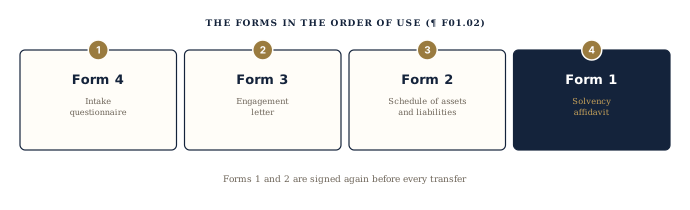
Order of use. The forms are used in the reverse of their numbering. The intake questionnaire (Form 4) comes first, before the engagement is accepted. The engagement letter (Form 3) follows once the planner has decided the engagement can proceed (see supra ¶ 5270.03). The schedule (Form 2) and the affidavit (Form 1) are completed before each transfer.
| Form | Signed by | When | Text |
|---|---|---|---|
| 4. Intake questionnaire | Client | Before engagement; updated before each transfer | ¶ F40 |
| 3. Engagement letter | Planner and client | On acceptance of the engagement | ¶ F30 |
| 2. Schedule of assets and liabilities | Client | Before each transfer | ¶ F20 |
| 1. Solvency affidavit | Client, under oath | At each transfer | ¶ F10 |
Statutory forms. Several domestic trust statutes prescribe the contents of a settlor's affidavit: Alaska Stat. § 34.40.110(j); Wyo. Stat. Ann. §§ 4-10-512(b), -523; Ohio Rev. Code Ann. § 5816.06; Tenn. Code Ann. § 35-16-103; W. Va. Code § 44D-5-503b; and, as an option, Utah Code Ann. § 75B-1-306 (see supra ¶ 5260.01). Where a statute applies, its wording controls and Form 1 is conformed to it. Wyoming's affidavit adds a continuing covenant to maintain liability insurance (see supra ¶ 5260.02).
The forms as evidence. Each form will be read, if the plan is challenged, by the creditor's counsel and the court. A true affidavit does not prevent avoidance of a transfer made with actual intent to hinder creditors, see Battley v. Mortensen (In re Mortensen), No. A09-00565-DMD, Adv. No. A09-90036-DMD (Bankr. D. Alaska May 26, 2011) (see supra ¶ 5260.04), and a false one is evidence of intent and may be a crime (see infra app. D, ¶ D60). The forms therefore ask for facts the client can verify and avoid conclusions of law the client cannot make.